Curaduría
Manizales, Colombia. Del 2 de noviembre al 15 de diciembre del 2023. Centro Cultural Universitario Rogelio Salmona
ARTISTA
Erika Orozco


Texto curatorial
Los acontecimientos extraordinarios, aquellos que son novedosos, célebres o espectaculares, generalmente producen un gran bullicio. En contraste, las acciones cotidianas suelen pasar desapercibidas, ser relegadas al silencio. El espionaje ficcional consiste en observar lo que está ante nuestros ojos, en escuchar lo que pasa desapercibido.
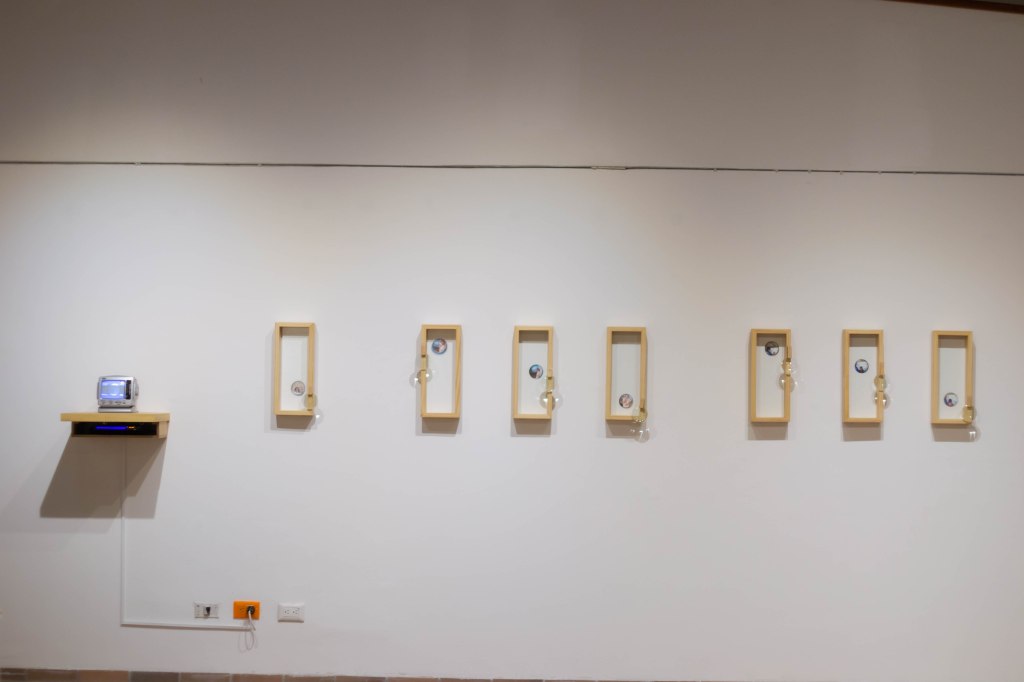
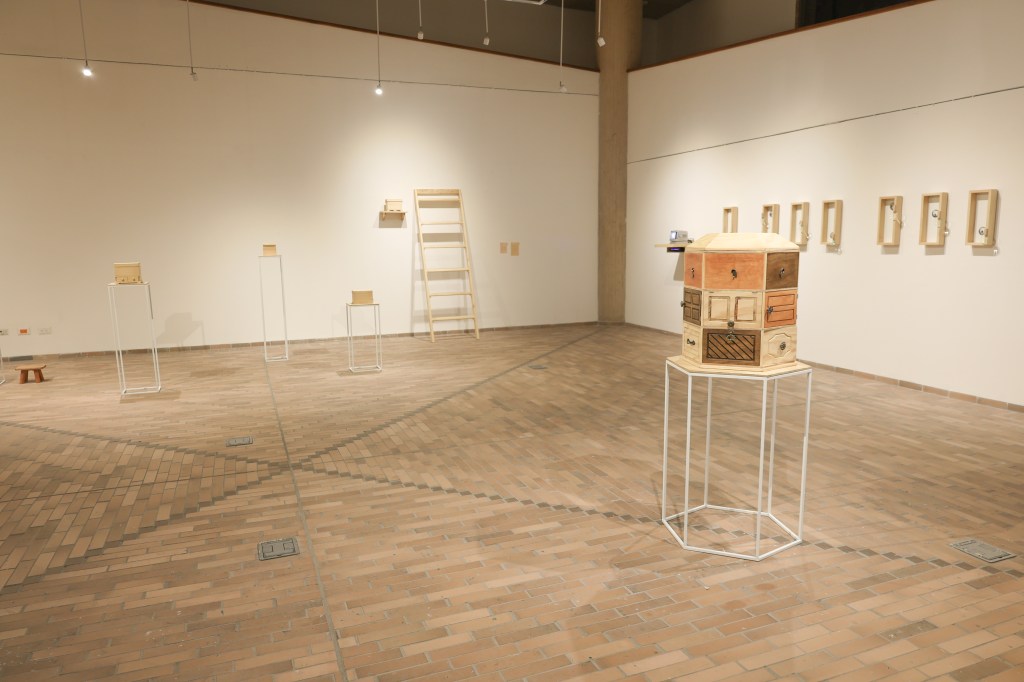
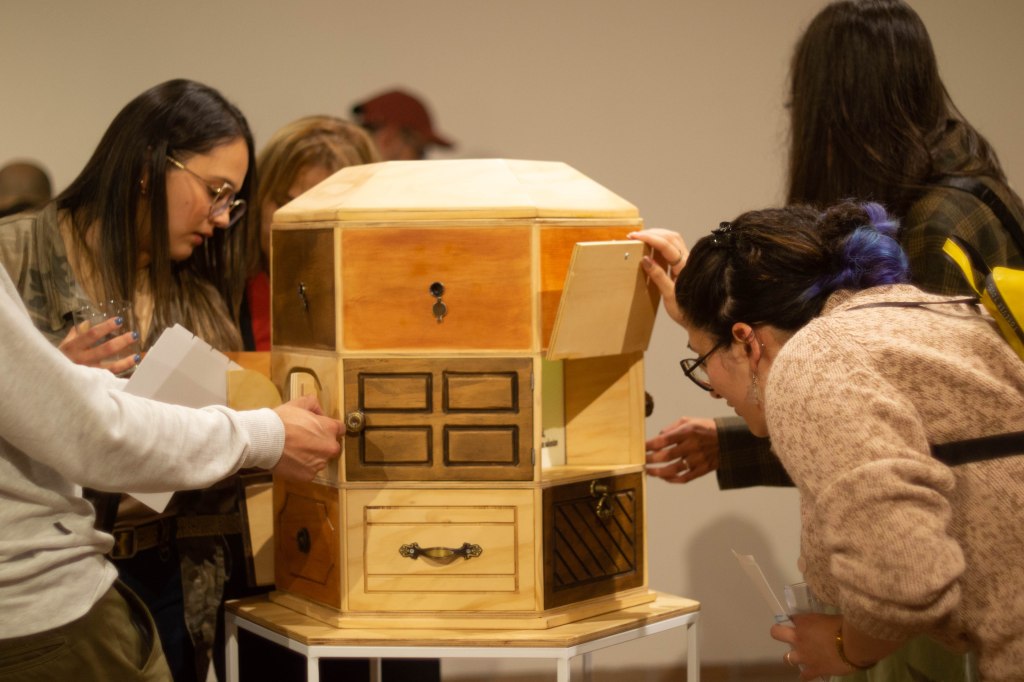
En los límites entre la literatura y las artes plásticas, la artista se permite recolectar narraciones y objetos cotidianos, se pregunta por su procedencia y por su destino, por la manera en que todo lo que atesoramos puede llegar a ser insignificante. Hay que tener cierta sensibilidad para comprender que los cofres y los cajones son guardianes de recuerdos y secretos, actúan como archivos (contienen todas las clasificaciones posibles e imposibles), son museos misteriosos y discretos. De la misma manera, en su trabajo, las mirillas, las minutas y las cámaras espía son membranas, una forma de atravesar y ser atravesada por el mundo, porque todo espionaje es una exploración de los intersticios entre el interior y el exterior, un autoespionaje.
La intimidad es -ante todo- una forma de complicidad, por esta razón, no se puede reducir al dominio de lo privado e inexpugnable, es un lenguaje que nos permite relatar el día a día, los vínculos afectivos que tejemos con objetos, personas y comunidades, el estremecimiento ante lo ordinario, ante lo “común”, ante las rutinas y acciones cotidianas.
Pedro Antonio Rojas Valencia
Eng
Curatorial Text
Extraordinary events—those that are new, famous, or spectacular—usually create a lot of noise. In contrast, everyday actions often go unnoticed, relegated to silence. Fictional espionage consists of observing what is right in front of us, listening to what goes unnoticed.
On the border between literature and the visual arts, the artist allows herself to collect everyday stories and objects, questioning their origins and their destinies, and reflecting on how everything we treasure can eventually become insignificant. One must have a certain sensitivity to understand that chests and drawers are guardians of memories and secrets. They function as archives (containing all possible and impossible classifications), mysterious and discreet museums. In the same way, in her work, peepholes, minutes, and spy cameras are membranes—ways of passing through and being passed through by the world, because all espionage is an exploration of the gaps between the inside and the outside, a form of self-espionage.
Intimacy is, above all, a form of complicity. For this reason, it cannot be reduced to the domain of the private and impenetrable; it is a language that allows us to narrate the day-to-day, the emotional connections we weave with objects, people, and communities, the shiver before the ordinary, the “common,” the routines, and everyday actions.
Pedro Antonio Rojas Valencia
 Pedro Rojas